
Our Mission
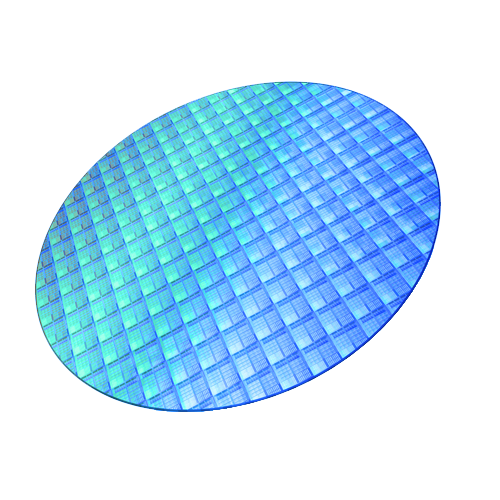
Wafer scale compatible
Fully wafer scale compatible
combining foundry processing
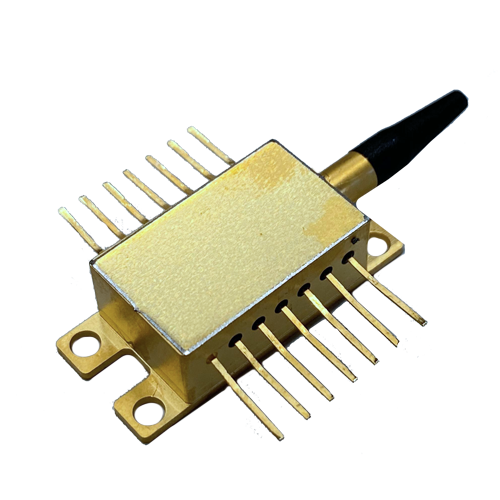
Low Linewidth Laser
Enables record low
Line width laser on chip
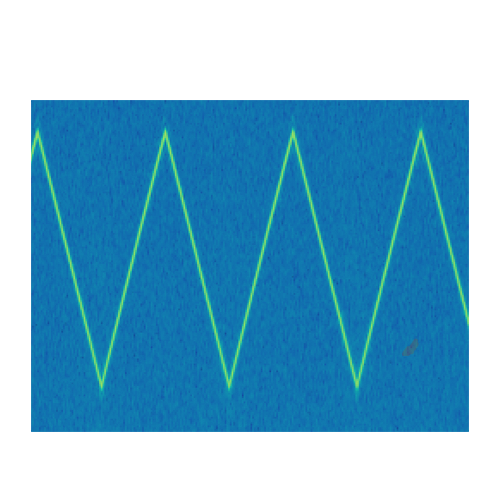
High performance
High speed, high linearity
and low power scanning
Technology
DeepLight’s product is an ultra-narrow linewidth laser at 1550 nm, with high power, unprecedented tuning bandwidth in compact form factor, with integrated triangular waveform generator for direct use in FMCW coherent laser ranging.
Our technology is based on photonic integrated circuits compatible with wafer-scale manufacturing.
Latest news

Prof. Tobias Kippenberg wins 2021 R.W. Wood Prize
The Optical Society (OSA) has announced the 2021 recipient of the R.W. Wood Prize is Professor Tobias J. Kippenberg at EPFL’s School of Basic Sciences (Institute of Physics). Professor Kippenberg “is honored for pioneering contributions to the realization of...
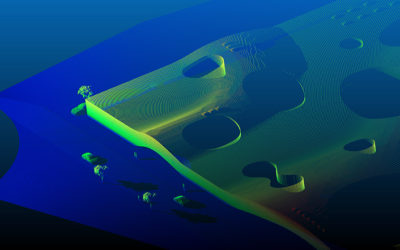
DeepLight awarded prestigious tech-transfer funding
The new technology allows unprecedentedly fast tuning and high chirp nonlinearity while maintaining small compact module size, which are critical for technology competitiveness in large and demanding LIDAR market. The project addresses the challenge to provide...
Press
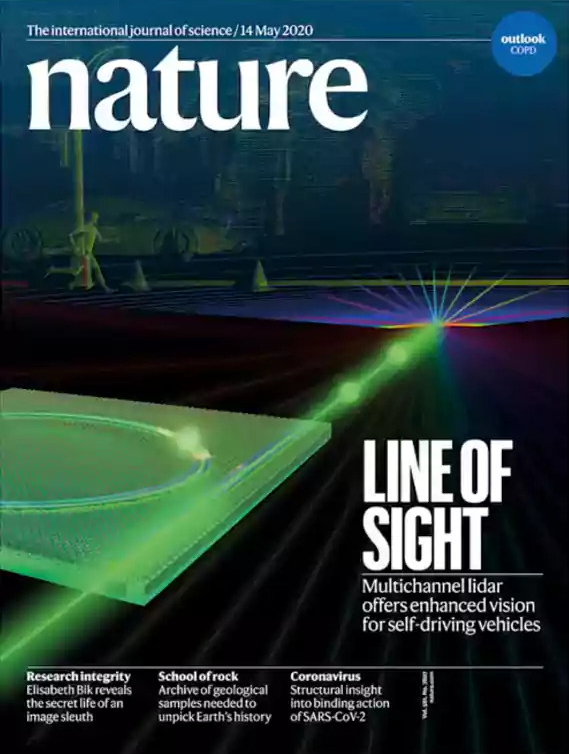
Speeding up long-range coherent LiDAR
LiDAR is a technique used for measuring distances with laser light. In a study published in Nature, researchers at EPFL show a new way to speed up a type of LiDAR engine by using photonic circuits.
Read more : https://actu.epfl.ch/news/speeding-up-long-range-coherent-lidar-5/
Shaking light with sound
Combining integrated photonics and MEMS technology, scientists from EPFL and Purdue University demonstrate monolithic piezoelectric control of integrated optical frequency combs with bulk acoustic waves. The technology opens up integrated ultrafast acousto-optic modulation for demanding applications.
Read more : https://actu.epfl.ch/news/shaking-light-with-sound/
Contact
DEEPLIGHT SA
EPFL Innovation Park
c/o Fondation EPFL Innovation Park, Bâtiment C
CH- 1015 Lausanne
Switzerland

This work has received funding from the European Union’s Horizon 2020 research and innovation programme under grant agreement No. 101035029.